Why Wisconsin Aluminum Foundry Excels in Quality, Innovation, and Reliability
Wiki Article
Understanding the Refine: Just How Aluminum Foundries Create High-Quality Products
Aluminum foundries play a crucial function in producing high-quality items via a thorough procedure. It begins with melting raw aluminum, which eliminates impurities. Afterward, numerous molding strategies shape the metal right into desired forms. Accuracy during putting and solidification is vital to fulfill precise specifications. The lasts include completing touches that boost resilience and appearance. As modern technology developments, these procedures are refined better. What innovations are shaping the future of aluminum foundries?The Melting Process: Transforming Raw Aluminum
The melting process acts as an essential action in changing raw aluminum into functional products. Initially, aluminum scrap or raw ingots are put in a heating system where they go through high temperatures, typically reaching around 660 levels Celsius. This extreme warmth causes the aluminum to dissolve, enabling pollutants to rise to the surface, where they can be skimmed.Different melting techniques, such as induction melting or gas-fired melting, may be used depending upon the details requirements of the foundry. The selection of method can influence power efficiency and metal top quality. Maintaining accurate temperature level control is essential to guarantee consistent melting and to avoid oxidation that can compromise the product.
As soon as melted, the aluminum is ready for additional handling, setting the phase for subsequent procedures that will mold it into specific forms and items. Metal Castings. The quality of the melting process straight impacts the integrity of the final aluminum things produced
Molding Techniques: Shaping the Future
After the aluminum has actually been melted and contaminations removed, it awaits shaping via numerous molding methods. One of the most widespread approaches is sand casting, where a mold and mildew is produced from sand and a binder. This strategy enables complex styles and is cost-effective for reduced to tool manufacturing runs. Another popular approach is die spreading, which involves requiring liquified aluminum right into a steel mold under high pressure. This method leads to high accuracy and smooth surfaces, making it optimal for automation.
Irreversible mold casting is likewise used, employing reusable molds that enhance dimensional accuracy and surface area coating. Each molding strategy provides one-of-a-kind advantages, allowing foundries to tailor their processes based on product requirements and manufacturing quantity. By choosing the ideal approach, aluminum foundries can assure superior high quality and efficiency in their end products, solidifying their function in various markets.
Putting and Solidification: The Art of Casting
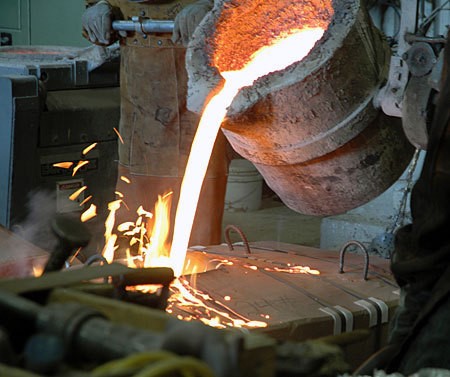
Putting molten aluminum into molds marks a vital phase in the casting procedure, where accuracy and timing are necessary - Metal Castings. The foundry group have to carefully regulate the temperature level of the aluminum to guarantee perfect fluidity, preventing problems such as porosity or cool shuts. As the metal is poured, it streams right into the intricacies of the mold and mildew, filling every tooth cavity to create the preferred shapeSolidification starts instantly as the molten aluminum alters and cools to a solid state. This phase is affected by a number of aspects, consisting of the mold product, thickness, and ambient temperature level. The cooling price must be managed to avoid stress fractures or warping in the completed item.
When solidified, the aluminum handles the specific measurements and characteristics of the mold and mildew, setting the stage for subsequent processing. This pouring and solidification procedure exhibits the delicate equilibrium of art and scientific research in aluminum casting, essential for creating top notch products.
Finishing Touches: Making Certain Quality and Accuracy
Assuring high quality and accuracy in aluminum items needs meticulous focus to information during the finishing process. This phase entails various techniques focused on improving the surface area attributes and dimensional precision of the cast parts. Typical methods include machining, surface treatment, and sprucing up. Machining corrects any type of dimensional discrepancies and achieves the preferred resistances, while surface area treatments, such as anodizing or powder coating, offer rust resistance and enhance aesthetic charm.Polishing removes surface blemishes, causing a smooth coating that meets rigorous requirements. Quality assurance is extremely important; each finished piece goes through strenuous assessment to identify any type of flaws. Advanced determining devices, like coordinate measuring devices (CMM), are commonly utilized to assure compliance with design requirements. In addition, competent service technicians play an important function, bringing experience and know-how to identify problems that equipments might neglect. This thorough ending up process eventually ensures that the aluminum products satisfy customer expectations for top quality and performance.
Advancements in Aluminum Foundry Technology
The quest of quality and precision in aluminum items has actually resulted in substantial developments in factory modern technology. Innovations such as robotic automation have structured procedures, enhancing effectiveness and minimizing human mistake. These robotics are currently efficient in carrying out complicated jobs, consisting of exact mold and mildew handling and material putting, which ensures regular item quality.On top of that, the combination of computer system mathematical control (CNC) equipments has actually reinvented machining procedures, enabling detailed layouts and tighter resistances. Advanced simulation software application helps with much better process planning by forecasting prospective issues and maximizing metal circulation. Moreover, the adoption of environmentally friendly techniques, such as reusing aluminum scrap and utilizing check here low-emission furnaces, has boosted sustainability in the market.

Often Asked Questions
What Sorts Of Aluminum Alloys Are Typically Used in Shops?
Typically used aluminum alloys in foundries consist of 356, 319, and 413. These alloys are known for their excellent spreading residential or commercial properties, mechanical toughness, and resistance to rust, making them suitable for a vast array of applications.Just How Do Foundries Make Sure Environmental Sustainability in Their Procedures?
Foundries apply environmental sustainability by reusing aluminum scrap, enhancing power efficiency, lowering emissions, using environment-friendly materials, and adhering to governing requirements, therefore reducing their eco-friendly footprint while preserving manufacturing high quality and performance.What Safety Procedures Are Implemented in Aluminum Foundries?
Aluminum foundries carry out numerous safety procedures, including personal safety equipment, ventilation systems, routine safety and security training, emergency action protocols, and devices upkeep checks. These techniques aim to lessen dangers and assure the health of all employees entailed.How Do Factories Deal With Problems in Cast Products?
Shops address issues in cast products by employing extensive examination techniques, including visual checks and non-destructive testing. When defects are identified, they may rework or scrap items, guaranteeing adherence to quality standards and client specifications.What Is the Typical Preparation for Aluminum Spreading Projects?
The common lead time for aluminum spreading tasks ranges from a couple of weeks to several months. Factors affecting this timeline include design intricacy, manufacturing volume, and the availability of products, which differ significantly across various foundries.Aluminum foundries play an important duty in producing top notch products via a meticulous process. Aluminum Castings. The foundry team need to meticulously control the temperature of the aluminum to guarantee perfect fluidity, avoiding problems such as porosity or chilly shuts. The search of quality and accuracy in aluminum products has actually led to considerable improvements in shop technology. Generally used aluminum alloys in foundries consist of 356, 319, and 413. Aluminum foundries execute numerous security measures, consisting of individual safety devices, ventilation systems, routine safety and security training, emergency feedback procedures, and tools maintenance checks
Report this wiki page